

Learn how to escape the 9–5 grind in America with a step-by-step strategy. Discover actionable tips, side hustle ideas, and smart planning for financial freedom in 2026.
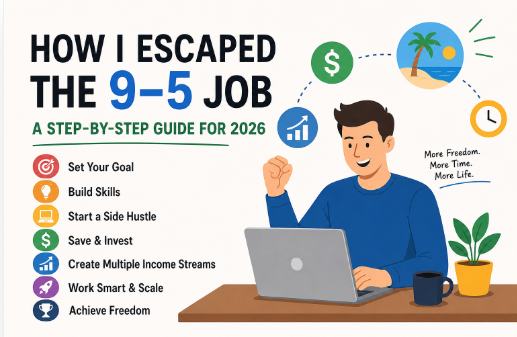
How I Escaped the 9–5 Job: A Step-by-Step Guide for 2026
The 9–5 job has been the standard for decades — stability, predictable paychecks, and benefits. Yet, more Americans are feeling trapped, unfulfilled, and burned out.
I was one of them. But in the last few years, I successfully transitioned from a traditional office job to full-time online income, achieving financial freedom, flexibility, and personal growth.
Here’s my step-by-step guide on how I escaped the 9–5 grind — and how you can too in 2026.
1. Recognize the Problem: Why the 9–5 Isn’t Working for You
Before making any change, I had to identify my pain points:
- Feeling drained after work
- Lack of control over schedule
- Limited income growth
- Missing out on personal passions
Tip: Write down what you dislike about your current job and what you want from your life. This clarity fuels motivation.
2. Build a Mindset for Freedom
Escaping the 9–5 isn’t just about quitting — it’s about adopting a new mindset:
- Entrepreneurial Thinking: Treat every side hustle as a business, not a hobby
- Risk Management: Plan finances before leaving your job
- Self-Discipline: Commit to long-term goals and consistent action
Example: I dedicated 2–3 hours daily after work to skill-building and small online projects.
3. Assess Your Skills and Interests
Identify what you can offer outside the office:
- Freelancing (writing, graphic design, programming)
- Selling products online (Shopify, Etsy, Amazon FBA)
- Creating digital content (YouTube, blogging, podcasts)
- Online teaching or consulting
Action Step: Make a list of your top 3 skills and explore how they can generate income online.
4. Start a Side Hustle While Working Your 9–5
Leaving a job without a backup is risky. I started small:
- Chose a freelance niche (content writing for tech blogs)
- Built a portfolio and profile on platforms like Upwork and Fiverr
- Allocated 10–15 hours/week to side hustle work
Pro Tip: Treat your side hustle like a mini-business: track earnings, clients, and growth metrics.
5. Save and Manage Your Finances Wisely
Financial preparation is crucial. I saved 6 months of living expenses before quitting.
Money-Saving Tips:
- Cut unnecessary subscriptions
- Build an emergency fund
- Reduce debt to lower monthly obligations
Example: If your rent is $1,200/month, aim to save at least $7,200 before transitioning.
6. Learn and Invest in High-Demand Skills
I quickly realized skill-building accelerates income. In 2026, the most lucrative online skills include:
- Digital marketing & SEO
- Web development & app creation
- Video editing & content production
- Email marketing & affiliate marketing
Tip: Free platforms (Coursera, YouTube, Skillshare) and affordable courses can teach you valuable skills without large upfront costs.
7. Build Multiple Income Streams
Relying on one source can be risky. I diversified:
- Freelance projects for consistent cash flow
- Affiliate marketing for passive income
- Digital product sales (ebooks, templates)
Visitor-Attractive Tip: Multiple streams reduce financial stress and increase growth potential. Even $50–$200/week from a side gig compounds over time.
8. Transition Gradually, Don’t Rush
I didn’t quit cold turkey. My steps were:
- Month 1–3: Side hustle growth and audience building
- Month 4–6: Reduce work hours if possible; focus on online revenue
- Month 7+: Full-time transition after stable income
Pro Tip: Track your monthly online income. Aim for at least 75–100% of your current salary before leaving your job.
9. Automate and Systematize Your Online Business
Automation allowed me to scale without burning out:
- Scheduling tools for social media
- Email marketing automation
- Templates and standard operating procedures for repetitive tasks
Example: Using Mailchimp to nurture leads while focusing on client projects saved me 10+ hours/week.
10. Embrace Continuous Learning and Adaptation
The online landscape evolves fast. I kept learning:
- SEO & algorithm updates
- Market trends in e-commerce
- AI tools for productivity
Actionable Step: Allocate 30–60 minutes daily to learning new skills relevant to your side hustle.
11. Mind Your Mental Health
Leaving the 9–5 doesn’t mean constant work. I set boundaries:
- Work hours for online business only
- Daily breaks, exercise, and hobbies
- Social support and networking
Tip: Hustle without burnout is possible if you plan your day strategically.
12. Celebrate Milestones and Track Progress
Tracking small wins keeps motivation high:
- First $500 earned online
- First client referral
- First fully automated workflow
Example: I kept a visual chart of earnings and tasks completed — seeing progress fueled momentum.
Conclusion: Escaping the 9–5 Is Possible in 2026
Quitting the 9–5 job is a dream for many, but it requires preparation, skill-building, and patience. My journey taught me:
- Clarity on goals and pain points
- Smart side hustle strategy
- Financial preparedness
- Continuous learning and diversification
- Self-care and boundaries
By following these step-by-step strategies, anyone in the USA can transition from a 9–5 job to financial independence — while enjoying the freedom and flexibility that come with it.