

Why do most people never succeed online? Discover the real barriers to online success, proven strategies to overcome them, and powerful tips for entrepreneurs in the USA to break through and thrive in the digital world.
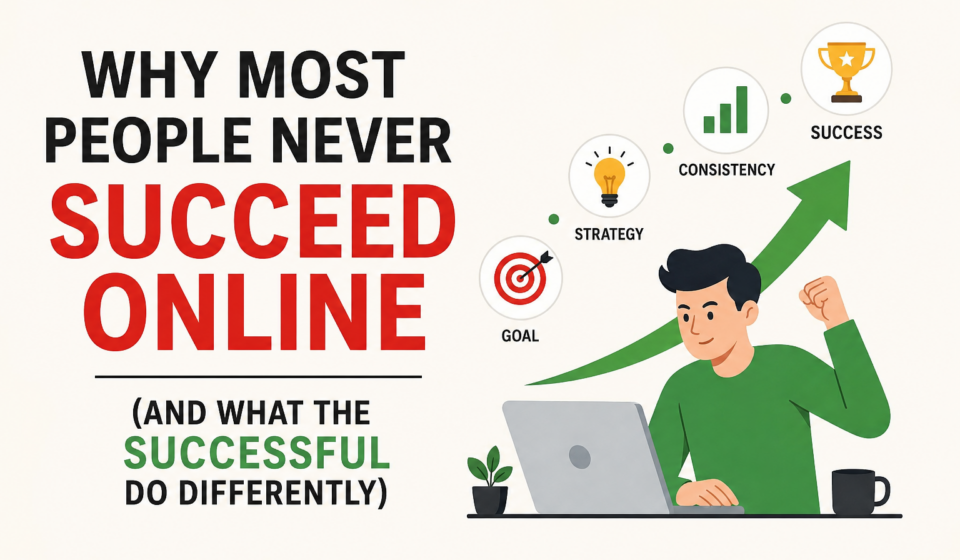
Why Most People Never Succeed Online (And What the Successful Do Differently)
The internet is filled with success stories — from bloggers earning six figures to entrepreneurs selling products worldwide — but for every success story, there are hundreds who never reach their goals. Whether it’s launching an online business, building a brand, or scaling a digital side‑hustle, the path to success can be full of obstacles, missteps, and misconceptions.
In this article, we explore why most people fail online, backed by real data, actionable strategies, and inspiration for anyone ready to take their online journey seriously.
1. The Illusion of Overnight Success
One of the biggest reasons people fail online is that they expect instant results.
The Problem: Hype Over Reality
In social media feeds and YouTube ads, it’s common to see people claim they made thousands in a week. These stories create unrealistic expectations.
👉 Reality Check: Most successful online businesses take 6–24 months of consistent effort to gain traction.
Example
A blogger who starts writing SEO‑optimized articles may not see substantial traffic for months, because search engines take time to index and rank content.
Solution
Set realistic milestones:
- Month 1–3: Build foundation (website, content plan, audience targets)
- Month 4–6: Test and adjust (SEO, engagement, monetization)
- Month 7+: Scale (email marketing, product launches, partnerships)
2. Lack of Clear Goals and Strategy
Most people fail online not because they lack effort — but because they lack direction.
Key Issue
They know what they want (success), but not how they’ll achieve it.
Example:
YouTube creators who post videos randomly versus those with a content strategy based on target audience and keyword research.
Actionable Tip
Create a simple success roadmap:
- Goal: Grow website traffic to 10,000 monthly visitors
- Strategy: Publish 2 SEO‑optimized blog posts per week + guest posting
- Measure: Monthly analytics review (Google Analytics, Search Console)
3. Ignoring Search Engine Optimization (SEO)
A surprising number of online entrepreneurs underestimate SEO — yet SEO drives long‑term organic traffic that converts.
Why SEO Matters
Paid ads stop when your budget does. SEO continues generating visitors without ongoing ad spend.
SEO Tips for 2026
✔ Target long‑tail keywords (e.g., “best productivity apps for remote workers”)
✔ Use question‑based headings (like this article)
✔ Add rich, relevant multimedia (images, videos, infographics)
✔ Optimize page speed and mobile responsiveness
💡 Example: A US tech blog using SEO can attract readers nationwide — from New York to California — without paying for ads.
4. Fear of Failure and Impatience
Success online requires experimentation — and not everything will succeed.
The Mindset Barrier
People often quit too early:
- First product launch fails → Give up
- First blog post gets no traffic → Quit
But suffering failures is part of the journey.
The Successful Mindset
✔ They treat failure as data, not defeat
✔ They iterate and improve based on real feedback
👉 Practice: After a campaign fails, ask:
- What worked?
- What didn’t?
- What can I test next?
5. Not Understanding Audience Needs
Another fatal mistake is creating content or products without knowing the audience’s biggest problems.
Why This Matters
If you sell a fitness program to beginners but your audience is advanced athletes, you’ll miss the mark.
How to Get Audience Insights
✔ Run polls on social media
✔ Analyze competitor comments
✔ Use keyword research tools to see what questions users ask
Example
A cooking blog focusing on “quick meals for busy parents” will perform better than generic food content because it solves a specific pain point.
6. Over‑reliance on a Single Platform
Many online businesses depend on only one channel:
- Instagram for marketing
- YouTube for traffic
- Amazon for sales
The Risk
Algorithm changes can wipe out your reach overnight.
Diversify Your Online Presence
✔ Website (brand central hub)
✔ Email list (direct audience access)
✔ YouTube/Podcast (engagement medium)
✔ Social platforms (build awareness)
💡 Example: When Instagram changed its algorithm, many influencers lost reach — but those with email lists still profited.
7. Poor Time and Resource Management
Success online isn’t just what you do — but how you manage your time.
Common Time Traps
❌ Spending hours on content that no one sees
❌ Chasing every trend without strategy
❌ Ignoring automation and tools
Smart Productivity Strategies
✔ Batch content creation (create 5 videos in a day)
✔ Automate postings (Buffer, Hootsuite)
✔ Outsource repetitive tasks
8. Inconsistent Execution
Consistency is the backbone of any online success plan.
The Problem
Many people start strong for 2–3 weeks, then fade.
How to Stay Consistent
✔ Set weekly output goals (e.g., 3 blog posts, 2 videos)
✔ Track your progress publicly (accountability)
✔ Use calendars and reminders
Real Example
Podcasters who release episodes weekly build loyal audiences faster than creators who post sporadically.
9. Undervaluing Email Marketing
Many beginners focus only on social platforms and ignore email lists — one of the most profitable assets online.
Why Email Marketing Works
✔ It belongs to YOU (not platform controlled)
✔ Higher engagement rates
✔ Direct sales funnel potential
Starter Guide
- Offer a free resource (lead magnet)
- Collect emails via your website
- Send weekly value‑packed newsletters
10. Not Testing Pricing, Offers & Content Formats
A huge reason people fail is they assume their first idea is perfect.
Smarter Approach: Test & Validate
✔ A/B test headlines
✔ Try different pricing tiers
✔ Experiment with short vs. long‑form content
Example
An online coach could test:
- $97 introductory course
- $297 advanced program
- Monthly subscription option
Data reveals what the audience prefers — so you make informed decisions.
11. Not Building Real Community Engagement
Visitors are more likely to buy from brands they feel connected to.
How Community Drives Success
✔ Higher trust
✔ Higher referrals
✔ Free word‑of‑mouth marketing
Ways to Build Community
✔ Respond to comments
✔ Host live Q&A sessions
✔ Create Facebook or Discord groups
📌 Example: Brands like Glossier and Patagonia thrive because they foster a passionate community, not just customers.
12. Giving Up Too Soon — The Tipping Point Advantage
It often takes persistent effort to reach success.
💡 Harvard Business School research shows entrepreneurial success often requires 7–10 years of steady commitment.
While digital businesses can grow faster, the same principle of persistence applies.
Proven Steps to Start Succeeding Online (2026 Guide)
Step 1: Choose Your Niche
Pick a specific audience with a clear problem.
✔ Example: “Plant‑based recipes for busy professionals”
Step 2: Build a Simple Website
Use platforms like WordPress, Wix, or Shopify to launch fast.
Step 3: Optimize for SEO
Research keywords your audience is searching for and write content around them.
Step 4: Grow Your Email List
Add signup forms with incentives like:
✨ Free guide
✨ Checklist
✨ Mini‑course
Step 5: Create Valuable Content
Consistency > Perfection.
Step 6: Test, Measure, Improve
Use analytics to refine and grow.
Step 7: Scale & Diversify
Consider:
✔ Online courses
✔ Coaching
✔ Affiliate partnerships
Conclusion: Success Favors the Prepared
Most people never succeed online not because they lack talent, but because they lack strategy, persistence, and understanding of digital fundamentals. The internet rewards consistency, clarity, and value.
By applying the principles in this article — from SEO and audience research to resilience and diversification — you’ll be setting yourself up for lasting success in 2026 and beyond.